Here among the neurotypicals, I am determined, at least, to write without narrative, without the given accoutrements of story that brings them comfort and me pain:
symbol,
metaphor,
culture,
stereotype,
nationality, and
authentic culture,
prison.
An early, wrongly-directed attempted to escape the neurotypicals in the DDR.
Where? Why, here:
Not story.
All narratives are the causes of war. But the neurotypicals won’t tell you that. All facts. But the neurotypicals can’t see that. All counter facts. The neurotypicals are just too good at countering facts. All virtues and bios. All humans can generate those between an olive and its pit. All deaths. It’s too easy to leap to war with that. Here, let me show you:
Right, a translation. Here:
We’ve got to stand together, all of us, otherwise we’re just in Hameln with the rats, and…
…false.
Editor’s note:The Pied Piper of Hamlin is a terrible tale that documents the sale of citizens of Hameln town by their Prince as forced settlers in newly-acquired border regions in Poland. The price? Usually six silver dollars a head. Such shenanigans allowed princes to fund armies, to conquer more territory, to… well, you get the picture. So, to that one thing, don’t lay the blame on any piper in Joseph’s Coat of Many Colours, and don’t lay the blame on the messenger. Face the world, while you can!
As well proven by history and graveyards.
An archaeological dig in Hameln.
We all have front row seats at our deaths.
An Old DDR Image of the Pied Piper
Don’t you dare make a narrative out of it. This is not a story.
Mayfield Parish’s Version, at the Palace Hotel, San Francisco, 1909
This is the real thing. Hameln is not on a hill. Stop dreaming. Drinks won’t help. Be reborn instead. I know I am.
For two weeks recently I was inside one of the world’s most advanced neurological wards with a condition that involved hallucinations, related and unrelated paranoia, a sort of rigor mortis, which I believed to be self-induced to feign death, and other creative and imagined terrifying experiences wrapped into a loss of space-time and identity.
SS Barracks, Buchenwald
The camp was built by the former elected socialist and democratic politicians of Germany.
I tried several times to escape from a secure ward. Twice, I was restrained by heavily protected security persons in body armour, assisted by ward staff and perhaps visiting relatives. Once, I left a blood trail near where I was hiding in an open gown, tackle waving about, behind a perfectly skeletal bed trolley in a lighted, abandoned room. I remained there for some time despite coaxing, by very pleasant psychiatrists, and others.
The Buchenwald Gate
A judge from the Cold War Capital, Bonn, holds the key. The words on the gate are Jedem das Seine. To each their own. The letters can only be read from within the prison.
This is an instance of what I call:
The First Lesson of Transculture:
Real people have no character. Only characters have character.
I wrote that in my essay on the codependency of foreign aid: The Apocalypse of the Narrative World (and my role in it).
Once I refused to cross a black line on the floor. I think it designated the border to the staff lounge and office space.
Guarding the Iron Curtain in the Fulda Gap.
For a generation, this was the proposed battleground for World War III.
I apologize for some of the stereotypical nature of my hallucinations.
I had a fairly long one, where I was in hiding from a son, who also was an owner of the hospital. I imagined it to be a private one in the Caribbean.
This is an instance of what I call:
The Second Lesson of Transculture:
Personality is a construct, some of which is consciously done as performance, some of which is scripted by context and derived, some as programed derivations, some designed as legacies (both biological and cultural). Some is only desire manifest. Some is sold.
I also wrote that in my essay on the codependency of foreign aid: The Apocalypse of the Narrative World (and my role in it).
In this hallucination, it was extremely important I control the flow of midnight stars, tiny white pricks of light, in an upward direction in increased speed towards the pole.
It is possible they were fireflies.
This movement of lights commencing and accelerating at the right moments would open a portal.
I do not know what this portal was for. I was guarded behind a curtain by a person from Zimbabwe who had both white and black spotlights to detect whether I was moving or not.
Probably Not.
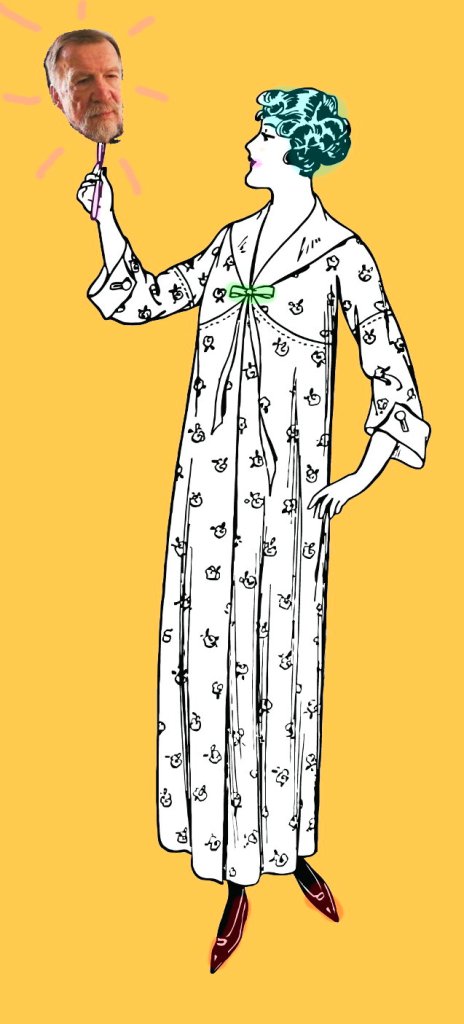
What began as a poster cancelled in the nightly Communist-Nazi street battles of Weimar, in the river valley below Buchenwald, became an image of myself when I looked in the mirror.
The private clinic, set in a countryside setting amidst ruins which included the folly reconstruction of Addenbrookes Hospital in Cambridge, was called
‘Lillian’s’.
From behind the curtains, I often heard the voices of various consultants discussing flights to their next assignment for brain surgery or brain experimentation.
I apologize, again, for the clichés. It is possible that I was never Hamlet. It is possible that
I had become African.
This is an instance of what I call:
The Third Lesson of Transculture:
Identity is only a fantasy. It is the thing that gives real advantage to oppressors, predators and criminals. And lovers.
Someone calling himself me wrote this in The Apocalypse of the Narrative World (and my role in it).
Most of the experimental clichés were in the field of transforming certain old and rich people into younger people, or with eliminating sectors of old people active in economic activities which had no relevance.
I have since been told that many people succumbed to the same hallucinations at the time.
Getting into Trouble in Kaiserslautern:A Self Portrait
Barbarossa started his bungled crusade (the 2nd) here.
Now, doesn’t that sound like literature?
The consultants (behind the curtains) ordered brandy and other liquors (as well as bagels with salmon and crab on peppered crackers) from the world, while I was served horrific layered puddings and vile coloured squash by masked individuals.
Had they realized that I was neurodiverse?
Sometimes they were in carnival dress. Sometimes they were relatives. I peeped out to see the sunset over the ruins.
I met Zelensky in Weimar Before He Started Dressing in T-shirts in Kiev
This is an instance of what I call:
The Fourth Lesson of Transculture:
The literature of our time is not in books.
As one of the many Richard Rathwells I have been wrote in The Apocalypse of the Narrative World (and my role in it):
The object of poetry and some other arts is to detach from these sorts of things intellectually and emotionally and encounter what is there, and spin it in language as precisely as possible. Poetry, in this meaning, is not necessarily formally presented as such. It can be invisible in ordinary life… In speech, silence and memory.
And what you find out as an aid worker in Africa, to your peril:
It can be something else previously unimaginable.
Late at night, there was a great celebration in the bar downstairs. The staff guarding me explained that ‘Lillian’s was ‘saved’. By the block fees paid for me. By expenses charged as accounting tricks. By other charges for unnecessary treatments that kept our bed stay going. By the removal of people who were unproductive experimentally and unprofitable because treatment was not working. By all that.
Hanging Out as Angela Merkel at Barbarossa’s Hideout
(Where the neo-Nazis hid from the communists.)
All literature is political.
During the celebration, one colourfully dressed Caribbean remarked to another that he saw from the window in the fields beyond, my relative and co-owner of the facility riding by on the way to the beach for a midnight swim on a carbon bike, towing my dog on a leash.
For this undercover work, I was in training for a long time. I call this:
The Revenge of the Neurotypicals.
A perennial favourite, it went through many editions.
Autobiographical interlude, just for you:
I do have experience with neurotypical narratives, whether as groups of sisters, committees of guardians of the state or party, masters of departments of great institutions and budgets, laboratories and space programs that prey upon infants of the neuro diverse.
Going deep undercover to rescue the space dogs.
I am no elite. I was raised by a virtual single mother. It was in the backwoods. Throughout the world there were millions of us backwoods persons, with mothers virtually made single because dads, virtual or not, were at wars. I was not sure which war it was in my case at the time of my birth or early schooling or other times he was supposed to have returned and went.
Maybe it was a war in Lesotho. I did try to work as a teacher during that one myself, although by my time the weapons had been upgraded.
Schooling was at first in a small hut-like place heated by a wood stove. The teacher hated us, me more than most. Despite being pre-school I would get the grades mixed up
(we were all together)
and answer the wrong questions. This resulted in a loss of patience, an order to the other students to beat me and me fleeing for my life down the path and across the river to the home of a widow who defended me with the sword of her ancestors.
Baba Yaga: my teacher in life.
This took place in Canada, where bullying is a crime now, but then it wasn’t.
That war ended and my mother, still virtually single and supplementing a service income that never came by living in a storage area at relatives’ in the cold or picking various commercial agricultural things, and evading rape in rainy fields and seasonal accommodations, moved.
So, really, it was outside of Canada that I started collecting my selves. End of autobiographical interlude.
At Lillian’s, I spent an amount of my hallucinatory time faking, as I thought, rigor mortis, in the hope that I would be rolled beyond the locked doors as a corpse. However, I seemed unbelieved. Persons tugged at my eyelids and repeatedly asked me to stop.
I then constructed a master plan, fragments of which I remember. The key to the plan emerged when the rigor mortis led to a funeral which was attended by staff, including cleaning staff, consultants, and the aforesaid team of relatives and owners. It was puzzling, as I had never been accepted as a certifiable corpse.
That’s me inhabiting the corpse of the statue of Hindenburg, erected at Barbarossa’s Hideout, toppled by the communists, dug up by the neo-Nazis, and left there in its grave by bureaucracy.
And all this time, that trickster Harold Rhenisch and I were working on our new book Don’t Expect the Sun to Shine, about a wake for
There was a lot of giggling as I lay there. One by one, the mourners excused themselves, leaving the relative and owner, who had solidified down to one person, who had asked for a quiet moment. Alone with me, he laughed. He tossed onto my body what looked like a bundle of wet and decayed reeds.
I was at sea.
A resplendent pharaonic funeral on the Nile, it was not.
And if it was Canadian, it was not the Canada that Canada tells itself about. That looks like this:
The new book by Rathwell and Rhenisch, the wake for the precursor to AI, Robin Blaser, a kind of American intervention into the Coast Mountains of the Northeast Pacific shore, Don’t Expect the Sun to Shine…
… is itself a remake of Lindsay Anderson’s sheepish film, O Lucky Man!…
… which was less a film than the stage for a soundtrack by Alan Price …
… with Alan playing many of the parts between gigs.
When I saw it in a small mountain town in British Columbia in 1974, the theatre manager was so confused by it that he refunded our tickets. Richard had already left British Columbia. Not long after, he received his education in how little Canadian culture could do at that time, when exported to Africa. The experience is included in his visual novel Ultreye. He went as a Canadian. He finished his NGO experience as a being with two minds.
Ultreye is a post-individual viewpoint that saw the Western self as two selves, from the viewpoint of a non-Western third personality. Neurotypical literature and psychology would eagerly point out that this third personality is self awareness, as indeed it is. As a neurodivergent artist, Richard was discovering how
Neurodivergent literature employs the humour of masks, puppetry, buffoonery, and play. It seeks intrusions of objects bearing projections of selves aware of their fictional nature to turn both selves and fictions into dramatic stages. It then bows and departs.
As Richard learned from two decades of poking at literature as protest (and the police beatings that followed), this literature can be real action in a material world. It doesn’t have to be penned within the thorn hedge of a book. A Canadian abroad doesn’t have to follow the time-honoured model of embedded English writers, such as Sir Richard Burton…
… who “explored” Kenya like this:
Burton “exploring” Africa.
Richard Rathwell learned just how much literature and imagery can be euphemisms for silence and silencing, even at the same time that they are voice. The colony of Basutoland has been the independent African state of Lesotho since 1966, with the British Crown occasionally making it a protectorate due to the mangling of any ability at administration out of the Cape Colony.
In the end, Queen Elizabeth II became less a symbol of colonialism but of an invitation to modernity and independence:
Queen Elizabeth II inspecting the Territorial Police
With a purse!
This learning experience led to Richard’s fraught return to Canada thirty years later, documented in Don’t Expect the Sun to Shine. As Richard laid it down, colonialism remained very individual in Lesotho, and always contrary to expectations. What looked like good deeds and foreign aid support remained as ridiculous as Capetown’s experience with demilitarization on a model learned from the Highland Clearances in Scotland and foreign aid workers seemed to remain as stuck in inappropriate imagery as these oblate fathers moving a heavy imagery of the Boer exodus into Basutoland a century before:
A colonial initiative that continues to succeed in places like Nepal, the giving of goats as the foundation of an economy, ran right up against another aid initiative that seems obvious to any Canadian’s heart, the planting of trees. What in British Columbia, might have looked like this…
Tree Planting in British Columbia in 1973
Note the US Army Surplus T-Shirt
… but which was really a heavy-handed conflict with Indigenous land use…
… became an environmental and social disaster in Lesotho. To be effective in a global context, a Canadian first has to learn what Canada’s culture is in a global context and integrate it, not the other way around. As Richard documents:
A still from Ultreye
…in…
After that, Richard devoted himself exclusively to world literature, arguing that Canadian Literature does have a place there, albeit a neurodivergent one. That is, it could support divergence rather than convergence. Or independence rather than integration. Or literacy in images rather than to the authority of words. Watch how Richard’s intelligence became a field of interest, played from many points, instead of as an individual.
For those of you not from Britain’s old Black and Métis colony on the Northeastern Pacific, British Columbia, here is Horsefly:
Here’s how the American ranching culture that settled in Horsefly in 1864 (just as Blaser’s incursion in 1966) worked out in Lesotho:
Richard was learning that the neurodivergence that made his participation at university in Vancouver more of a protest than a partnership, had strengths in the world. Three lessons he learned are:
Neurodivergent worlds are diverse and alive and have diverse agencies.
Neurodivergent literature moves through them all.
Instead of abstraction and cultural traditions as foundations, it employs multiplicity of views and selves in flux.
These selves in flux led to the stop screen motion of the screen book, Don’t Expect the Sun to Shine. There, the wake, a celebration of academic literary connection goes awry when the city speaks…
It became a feast, but not for Blaser’s descendants. But then…
Life is like that.
Do check out Don’t Expect the Sun to Shine. You can order your copy from your bookstore or from Eighth House Publishing in Montreal.
A straight jacket. A drugged cosh. A warehouse super ego.
Academic culture is how duty to life is avoided.
As an architect I am making an intervention in this developing rave. I am constructing a thesis that Canada has no ethnicity. It is a hole into which the suggestion of the possibility of being Canadian is thrown…
Toronto at the Tipping Point
…along with genocidally-altered original nations.
Because ethnicity is no longer possible culturally, linguistically or as a life, it is re-membered by grant-aided, socially-parasitic arts, a loyal opposition trained not to depict anything beyond the fictionally parochial and the victim memorial, and other 3-D printed versions of Frankenstein’s monster.
The Bell Tolls for Thee. Really.
Without the stitching.
Canada is permanently a colonial culture, colonized not by European fur traders but by transculture itself, a culture of low sentiment.
Sediment.
It largely ignores the room and offers small complaint and smaller soul.
Its artists ignore one or more of three duties.
3
To art.
2
To entertainment.
1
To truth and beauty.
Even one is enough.
It is the fault of the artists that there is a fucking popular culture.
Long Live the Revolution!
More calmly, conflict often is a re-occurrence of previous contradictions expressed in new forms. It often occurs where culture, especially identity, is rendered political towards the creation or preservation of hierarchies, expressed by identity, cultural diversions, distortions and cover-up narratives — like a religion or ideology.
Can you really have your cake and eat it too?
On the other hand, when systems decline, incoherence arises, needs are not met, connections cannot be made, coping mechanisms fail and storming the chamber of the people is considered the highest form of liberty of and for the people.
Even though culture evolved as a substitution for instinct. Even though it rewires the processing of the sensations which prompt actions for securing survival and pursuit of desire, the associations that initiate emotions.
Even still.
The transcultural electrician is challenged to rewire that initiation, to create images that will shatter the dangerous and restrictive politics of stereotypes that block it. An electrician like that gets into the mind, to project in order to get a response, which then enters the transcultural field, confronting the dissonances that culture creates in gender, race and other continuous spectra.
To project, not to create a narrative arc, to react against acculturated memory and its social identity, not to complete a circle.
Transcultural politics is not a politics such as
‘multi-culturalism,’
which proposes rules of interrelationship and reconciliation between people grouped culturally and is based on adapting cultures to a common law, nor is it the politics of ‘interculturalism’ which proposes exchanges of cultural enterprises towards a common market, characterised by the critical filtering of culturally acceptable objects and activities to a mainstream and dominant culture.
Bild Lilly and R.R. at Buchenwald
In the ongoing collapse of globalism there is no dominant culture.
Says Global Culture
We all suffer from interpretive violence. No one helps construct anyone else from what could be plausible beyond that which is accepted. One person to any other is no more than a wind to a stone.
Bild Lilly All Grown Up
When people actually see themselves in books and poems, see themselves unfamiliar, in new planes, when they are no longer encouraged to see themselves in widely circulating stereotypes, they will prefer chaos, as I do, cured of vanity that supports the lack of conviction with quotations from the dead who cannot correct them.
Just Visiting
Let us look at grace, or freedom, or redemption, or
revolution.
None of them happen, especially not grace, in some God awful mild and present harmony. They come together in otherness.
In the strange.
As the early transcultural writer Ernest Hemingway said,